 The Deal Edit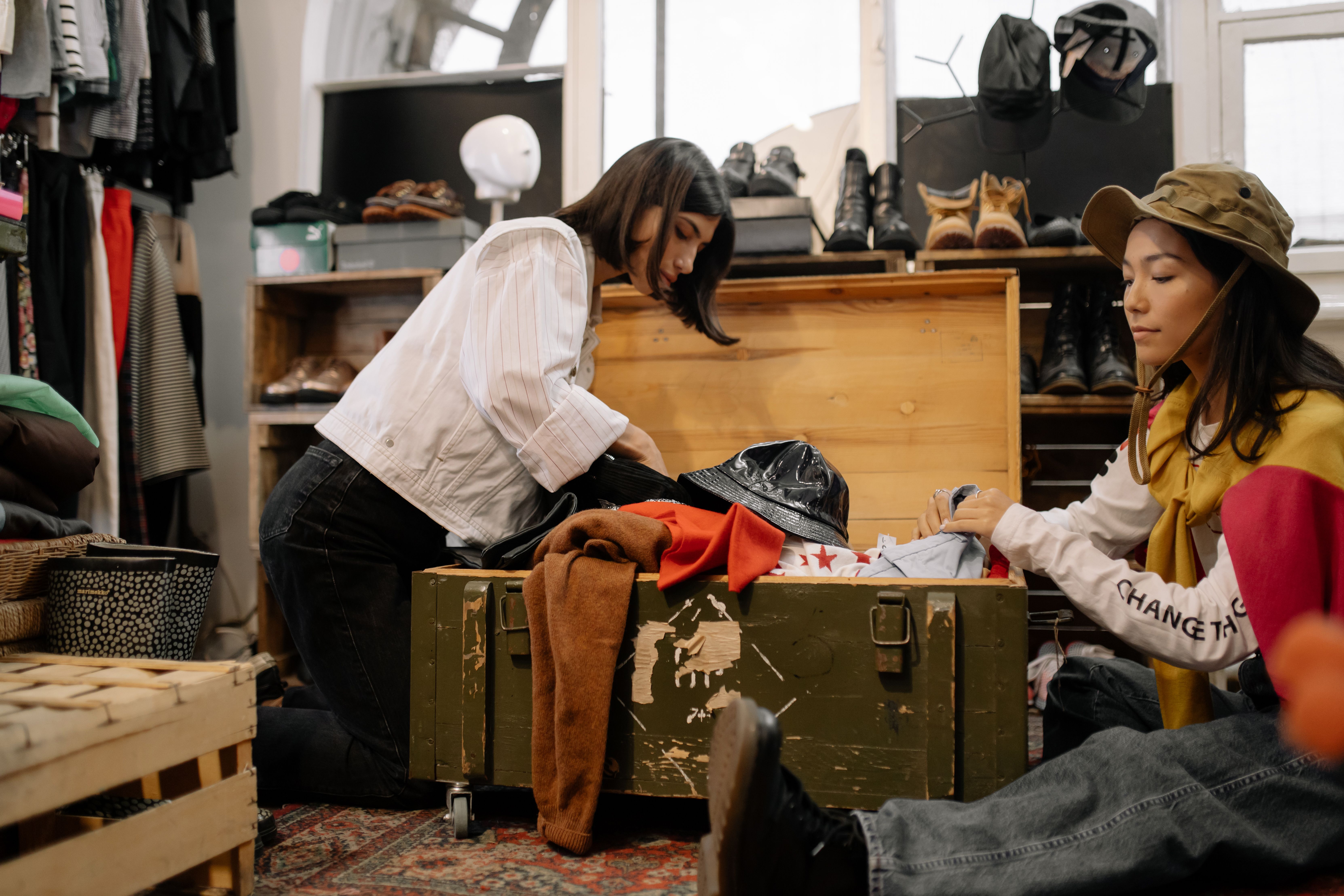
Most thrift stores are final sale — no returns, no exchanges, sometimes not even store credit. That makes the inspection you do in the store the only quality check you're going to get. Here's what actually matters.
Check the fabric before the style
Natural fibers (cotton, wool, linen, silk) tend to hold up better over time and age more gracefully than synthetics, which is part of why they're worth seeking out secondhand. Check the care tag, then check the fabric itself: hold it up to the light and look for thinning, pilling, or moth holes in wool and other natural fibers. A little wear is normal in anything secondhand. Thin patches you can see through, especially at elbows, knees, or seat, usually aren't worth the price no matter how good the discount looks.
Inspect every seam and closure
Run your fingers along the seams looking for fraying or loose threads, and actually work every zipper, button, snap, and hook the item has — don't just eyeball them. A stuck zipper can sometimes be fixed with a graphite pencil rubbed on the teeth, but a broken zipper pull or a missing button you can't match is a real cost you're adding on top of the price tag.
Smell and stain test before anything else
Do this one first, before you even try something on. Smoke smell is one of the hardest things to get out of fabric and often survives a wash. Hold the item up close and take a real sniff, not just a passing whiff on the hanger. For stains, check the usual trouble spots — underarms, collar, cuffs — by holding the fabric up to a light rather than just glancing at it. A faint stain in bright thrift-store lighting can turn out to be much more visible once you get it home.
Try it on, or measure it — don't trust the tag
Sizing on anything more than a few years old often doesn't match modern sizing, and vintage sizes in particular tend to run smaller than their label suggests. If the store has a fitting room, use it. If it doesn't, or if you're shopping online secondhand, compare the garment's actual measurements (laid flat: chest, waist, length) against something you already own and know fits, rather than trusting the number on the tag.
For furniture: check the structure, not the finish
A scratch or a faded finish is cosmetic and often fixable. A wobble is not. Push gently on any table or chair to test for wobble in the legs, open and close drawers to check they slide smoothly on their tracks, and look underneath for water damage or warping in the wood, which is much harder to spot from the top. Check that joints are actually joined — screwed or doweled, not just glued and starting to separate.
For electronics: test it in the store if you can
Most thrift stores sell electronics as-is, with no warranty and no return if it turns out not to work. If there's an outlet nearby, plug it in and test it before you buy. If you can't test it on-site, treat the price as what you're paying for a maybe, not a guarantee, and only buy what you'd be fine losing if it turns out to be broken.
Browse today's live deals if you'd rather skip the guesswork on something specific — thrifting rewards patience, but sometimes new-with-a-real-discount is the faster win.